
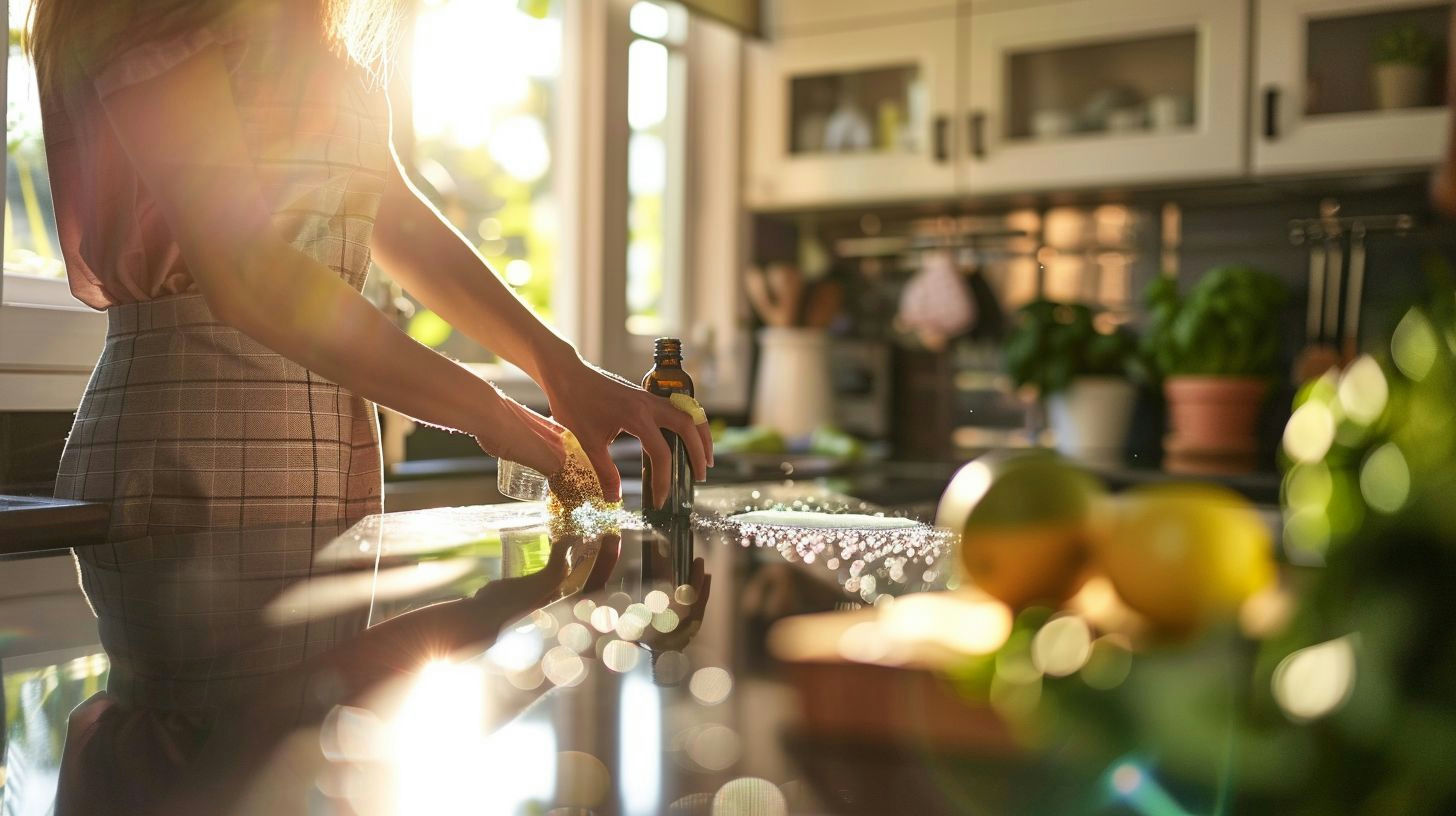
Wiping the ant trail off the counter every morning and finding it back by lunch is how most people start looking up how to get rid of sugar ants. The ants you wipe away are only the foragers. As long as a scout can still reach something sweet, the rest of the colony keeps following its scent trail into your kitchen.
The approach that works is slow: a bait the workers carry home, patience while it reaches the queens, and no spray in the meantime. It also hinges on a detail most people skip. The ants everyone calls sugar ants can belong to several different species, and a sweet bait that clears one kind can leave another untouched.
What Are Sugar Ants?
Sugar ants are not one species: the name covers several small ants that go after sweets. Depending on where you live, it can mean carpenter ants, odorous house ants, pavement ants or even an Australian species called the banded sugar ant. Health Canada does not use the term at all. It lists the ants that invade Canadian homes as carpenter ants, little black ants, odorous house ants, thief ants and pharaoh ants, with pavement ants also showing up indoors. With many species of ants in Canada (City of Calgary), a quick identification is worth a minute of your time.
Odorous House Ants
Odorous house ants are among the ants most often called "sugar ants" in North America (University of Nevada, Reno Extension). Workers are about 1/8 inch long, dark brown to black, and usually give off a rotten coconut smell when you crush one. Their colonies can form a network of connected nests with many queens, which often makes them harder to wipe out than most sugar ants. Our full guide to odorous house ants covers this species in detail.
Pavement Ants
Pavement ants are slightly larger sugar ants, typically about 2.5 to 4 mm long and dark brown to black, with fine grooves on the head and two tiny spines on the back (Penn State Extension). They nest in soil under sidewalks, building slabs and large rocks, and come in through cracks in the foundation or basement floor. Small piles of sand or soil next to a crack are a classic sign. They eat sweets but also grease, dead insects and seeds. The good news: a pavement ant colony usually has one nest and one queen, so baits work well on them.
Little Black Ants
Little black ants are tiny, typically about 1.5 to 2 mm long and dark brown to black (Northeast IPM Center). Colonies can grow to thousands of workers, often with several queens. They nest outdoors under wood, stones and debris, and sometimes inside wall voids near heat and moisture. Indoors they go for sweets as well as grease, oil and meat. If your ants are this small, our guide to small ants in the house helps you narrow down the species.
Ants That Prefer Grease
Ants that prefer grease or protein are often called sugar ants too, but sweet baits do little against them. UC IPM notes that thief ants and pharaoh ants prefer protein or greasy baits year-round, and TERRO says its liquid sweet bait does not work on pharaoh ants. Pharaoh ants are tiny, pale yellow and usually live indoors in heated buildings. If that sounds like your ant, follow our guide to pharaoh ants instead, because they need a different approach.
Are Sugar Ants Dangerous?
Sugar ants are a nuisance, not a danger. Health Canada says most common Canadian ants are not aggressive, and odorous house ants do not bite unless provoked and cannot sting (Utah State University Extension). The real problem is food: they can contaminate pantry items, so throw out anything they have crawled into. One warning: if you see large black ants and piles of sawdust, you may have carpenter ants, which can damage wood and need a different treatment.
Why Do You Have Sugar Ants in Your House?
Sugar ants in the house are foragers from a nearby colony that found food or water and marked the way with a scent trail. Once one scout finds a drop of syrup, the rest of the workers follow its trail. These are the usual triggers.
Sweet Food
Sweet food is the main attraction. Household ants feed on sugar, syrup, honey, fruit juice, and also fats and meat (UC IPM). Crumbs, sticky jam lids, fruit bowls, unrinsed recycling and pet food are all easy meals.
Water
Water draws sugar ants as much as food does. Leaky taps, wet sponges, standing water in the sink and damp cabinets under the sink give them a reliable drink, and odorous house ants and little black ants can nest near moisture inside walls.
Rain
Rain is a common reason sugar ants suddenly appear. Odorous house ants are most likely to invade homes in rainy weather, when rain washes away the honeydew they feed on outside (UC IPM). More generally, ants come indoors when their outdoor food runs out or the weather turns too hot, dry or wet.
Entry Points
Entry points are everywhere for an ant this small. Sugar ants come in through cracks in the foundation and basement slab, gaps under doors, around window frames and where pipes and wires enter the house.
Scent Trails
Scent trails explain why sugar ants keep coming back to the same spot. Many ants leave pheromone trails that guide other members of the colony to food (Nebraska Extension). Health Canada notes that trails often run along baseboards, carpet edges and cabinet corners. Follow the trail: it shows you where they come in and where to put bait.
How to Get Rid of Sugar Ants, Step by Step
Getting rid of sugar ants means killing the colony with slow-acting bait, not the ants you can see. Worker ants carry the bait back to the nest and share it with the queens and larvae, which is the only way to end the problem. Before you start, here is what not to do.
Why Sprays Make Sugar Ants Worse
Sprays make sugar ants worse because they can split the colony. Health Canada warns that spraying indoors where trails appear can cause the colony to split into several new colonies, and the City of Calgary says some barrier sprays can make the colony bud. UC IPM adds that spraying ants indoors does not stop more ants from coming in. If you have already sprayed and the ants are now in more places, switch to bait.
Step 1: Identify the Ant
Identify the ant first, because the bait has to match what the ants want to eat. Use the descriptions above: a coconut smell usually points to odorous house ants, soil piles by a slab crack often point to pavement ants, and tiny pale ants indoors in winter may point to pharaoh ants. A phone photo through a magnifying glass helps if you need a second opinion.
Step 2: Wipe Away the Scent Trail
Wiping away the scent trail stops new ants from following it to your counter. UC IPM recommends a sponge and soapy water as soon as ants come in. Nebraska Extension suggests a 1:1 mix of vinegar and water to remove pheromone trails. Vinegar mainly cleans and deters, though: it does not kill the colony, as our guide on whether vinegar kills ants explains. Do this once, before you set bait, then leave the trail alone.
Step 3: Remove Competing Food
Removing competing food makes the bait the best meal in the house. Wipe up crumbs and sticky spots, put sweets in sealed containers, rinse recycling and take out the kitchen garbage. TERRO, a bait manufacturer, also tells users to clear away crumbs, sugar and grease before setting its baits, and UC IPM advises cleaning up sugary spills and pet food. Our guide to getting rid of ants in the kitchen has more kitchen-specific tips.
Step 4: Set Bait on the Trail
Setting bait directly on the trail is what gets it into the nest. Health Canada recommends placing bait stations in the path of foraging ants and using two different baits at the same time. Good spots are along baseboards, under the sink, near the entry crack and beside the trail on the counter, always out of reach of children and pets.
Step 5: Leave the Bait for At Least Two Weeks
Leaving the bait in place for at least two weeks gives it time to reach the queens. UC IPM says it can take 5 to 10 days to see fewer ants, and Health Canada advises keeping baits out for at least two weeks and expecting to reapply. Do not panic if you see more ants at first: bait makers like TERRO say that is expected, because the ants are recruiting nestmates to the food. Do not spray, wipe or move the bait during this time, and refill stations that run dry.
Step 6: Seal Entry Points
Sealing entry points closes the door once the colony is under control. Health Canada recommends sealing visible cracks in the foundation and exterior walls and caulking baseboards, cracks and crevices indoors. Pay attention to the entry point you found by following the trail. Seal after the baiting period, not during it, so you do not cut the ants off from the bait.
When to Call a Pest Control Professional
Calling a pest control professional makes sense when the ants keep coming back after repeated rounds of baiting, when you cannot find where they come from, or when you suspect carpenter ants or pharaoh ants. Severe infestations may need a professional treatment aimed at the nest and around the house (Northeast IPM Center). A licensed exterminator usually starts with species identification and an inspection, then uses gel baits, liquid treatments or granular baits and seals entry points. You can get a quote from a recommended local exterminator through Pest Agent's referral form.
Ants still coming back after repeated baiting?
Get a free quoteWhich Sugar Ant Bait Works Best?
The best sugar ant bait is a slow-acting sweet bait that the ants actually eat. Fast poisons kill workers before they get back to the nest, so look for baits that work slowly, such as boric acid, borax, hydramethylnon, fipronil or indoxacarb. For our tested picks, see the best ant killer roundup.
Liquid Bait Stations
Liquid bait stations are the easiest choice for most sugar ants. They are pre-filled, closed so the bait does not dry out, and you only snap them open and place them on the trail. UC IPM says prepackaged bait stations are easy to use and quite safe if kept away from children and pets. Many liquid baits, such as TERRO's, use borax in sugar water and list the sweet-feeding ants they control; check the label for your ant.
Gel Baits
Gel baits are best for cracks, crevices and gaps where a station will not fit. You apply a small dot or line of gel along the trail or at the entry crack. Professional gels such as indoxacarb baits work by delayed action, which lets the ants spread the bait through the colony before they die.
Sweet Versus Protein Baits
Sweet versus protein baits is the most common reason a bait fails. Many sugar ants take sweet bait, but ant food preferences can change through the year, so UC IPM suggests offering more than one bait type and letting the ants choose. If the ants walk past your sweet bait for a day or two, add a protein or grease bait next to it. Some stations combine both.
Homemade Borax Bait
Homemade borax bait can work on sugar ants if it is weak. Nebraska Extension describes a borax, sugar and water bait, and Penn State Extension notes boric acid baits are slower acting. The key is a low dose: UC IPM says liquid borate baits work best at 0.5 to 1.0% in sugar water, while stronger mixes (store-bought stations often have about 5.4%) kill foragers faster but have less effect on the colony. Keep it away from children and pets. Our guide to homemade ant killers explains how to prepare and place it safely.
The PCP Number
The PCP number tells you a product has been approved by Health Canada. Health Canada advises always checking the label for a Pest Control Products (PCP) number, reading which ants the product covers, and following the directions exactly. Some provinces and municipalities also restrict certain outdoor pesticides, so check local rules before treating outside.
Bait Placement Safety
Bait placement safety matters most in homes with kids and pets. Use closed stations rather than open dishes, put them behind appliances or under cabinets, and keep them away from food prep areas. Health Canada and the City of Calgary say boric acid baits are generally low in toxicity to other animals, but that does not make them a snack: keep them out of reach.
How Do You Keep Sugar Ants From Coming Back?
Keeping sugar ants away comes down to leaving nothing for scouts to find. Once a colony is gone, another one nearby can send foragers in, so these habits are your long-term defence.
Food Storage
Food storage is the first line of defence. Health Canada recommends glass jars with rubber gaskets or plastic containers with tight-snapping lids for sugar, honey, cereal and snacks. Keep counters clean, sweep or vacuum often, rinse containers before recycling and empty the kitchen garbage often.
Pet Dishes
Pet dishes are a favourite target. Pick up food bowls between meals and sweep around them. Health Canada suggests setting the pet dish inside a shallow dish of water, because ants cannot swim across it.
Moisture Control
Moisture control takes away the water sugar ants need. Fix leaky taps and pipes, wipe sinks dry at night, drain standing water and do not leave wet sponges on the counter.
Foundation Clearance
Foundation clearance keeps outdoor colonies from moving right up to your walls. Keep plant debris and mulch away from the foundation (Northeast IPM Center), place composters a reasonable distance from the house (Health Canada), and caulk any new cracks you find in the foundation or exterior walls. For a broader plan covering every ant species, read our guide on how to get rid of ants or browse the ant hub.
Frequently asked questions
Do sugar ants bite?
Most sugar ants are harmless to people. Health Canada says most common Canadian ants are not aggressive, and odorous house ants generally do not bite unless provoked. The bigger concern is that they get into food.
Why do I suddenly have sugar ants?
Sugar ants usually show up suddenly because a scout found food or water and laid a scent trail for the rest of the colony. Rain, heat or dry weather that cuts off their outdoor food can also push them inside.
How long does it take to get rid of sugar ants?
Expect about two weeks with bait. UC IPM says it can take 5 to 10 days to see fewer ants, and Health Canada recommends keeping baits out for at least two weeks and reapplying if needed. Colonies with many nests, like odorous house ants, can take longer.
Does vinegar get rid of sugar ants?
No. A vinegar and water wipe can remove the scent trail and may deter ants for a while, but it does not kill the colony. Use it to clean the trail once, then switch to a slow-acting bait.
Will sugar ants go away on their own?
Sometimes they leave when the food source is gone or the weather changes, but the colony stays nearby and can come back. Removing food, baiting the colony and sealing cracks is the reliable way to keep them out.
Dealing with ants right now?
Answer a few short questions and we pass your request to a pest control company ranked near you.
Get a free quote