
Cockroach Infestation: Signs to Look For, Where to Check and What to Do
An infestation rarely shows as a crowd of roaches. They spend the day in cracks behind the stove, under the sink and around pipes.
The first evidence is indirect: pepper-like specks on a shelf, a dark smear on a baseboard, a musty smell when a cupboard opens.
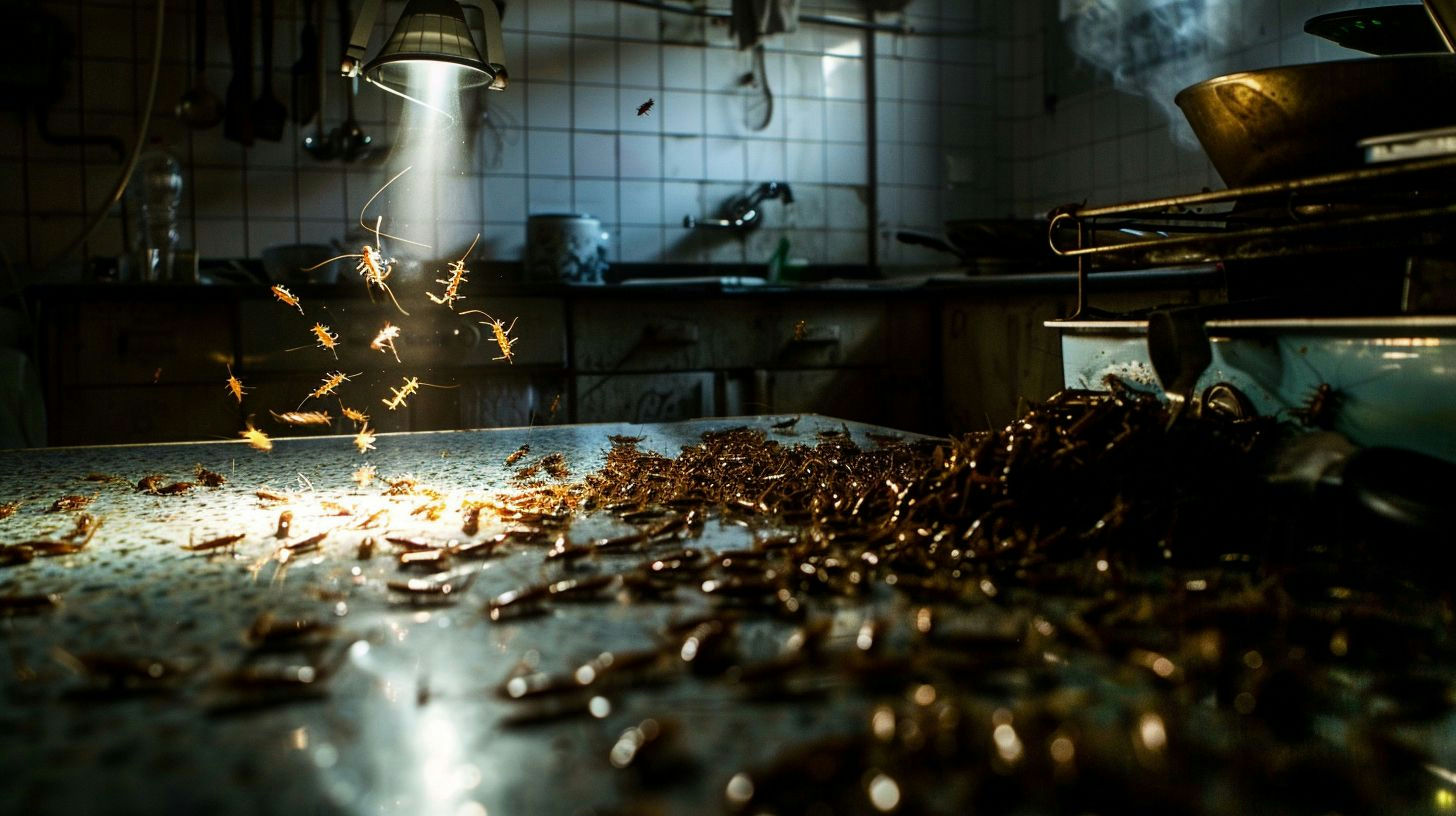
Look for droppings, smears, egg cases and shed skins before you see many roaches
What Is a Cockroach Infestation?
A population of cockroaches breeding inside your home, hidden in warm, damp spots near food and water.
Mostly active at night, they can go unnoticed for some time (Health Canada).
One roach is often the first visible sign: see how many cockroaches make an infestation.
How it starts
A few roaches or one egg case carried in on used furniture, food, empty beer and soft drink bottles or shipping cartons (Health Canada).
In apartments, they spread unit to unit (Manitoba). See how an infestation starts and where cockroaches come from.
How fast it grows
A German egg capsule usually holds 30 to 48 eggs. The female carries it for several weeks before dropping it in a crack (Penn State).
Hundreds to thousands of roaches per year (Manitoba). See why there are suddenly so many.
Does it mean your home is dirty?
Not necessarily (Health Canada). Food, water, warmth and hiding places matter, and a well-kept home can offer them.
Crumbs, dirty dishes and leaks still help an infestation grow faster.
What Are the Signs of a Cockroach Infestation?
Physical traces show long before many roaches do.
Main signs (UC IPM): dark spots or smears of droppings, cast skins, egg cases, and live or dead cockroaches.
Droppings
Small species like the German roach leave ground pepper or coffee grounds. Larger ones leave pellets like a mouse's, slightly smaller (Orkin Canada).
Check cabinet edges, drawers, behind appliances and corners. They carry a pheromone that attracts others: clean them once noted (UC IPM).
Smear marks
Dark, irregular streaks of droppings where roaches rest or travel.
In humid spots: under sinks, where the wall meets the floor, around pipes. German roaches stain surfaces they touch (UC IPM).
Egg cases
Small, hard capsules that hold the eggs (oothecae). Size and colour vary by species: see the table below.
Finding them means roaches breed in your home, not just pass through.
Shed skins
Empty, light brown shells left at each molt. German nymphs molt six to seven times (Penn State), so a growing population leaves many.
They are an allergen source: vacuum them up.
Musty smell
High populations give a characteristic odour from their secretions (Penn State), a musty « cockroach odour » in very heavy infestations (Iowa State).
Strongest in closed cupboards, under sinks and in pantries.
Cockroaches in daylight
They are night insects: daytime sightings may mean a heavy population or stress from no food or water (Penn State).
A roach in a bright area or by day may be a sign of an infestation (Manitoba).
Dead cockroaches
Listed by UC IPM among the signs.
A few under the fridge, in the tub or along baseboards suggest live ones nearby, especially if you used no insecticide.
Egg cases by species (UC IPM)
| Species | Colour | Size | Where you find it |
|---|---|---|---|
| German | Light beige | About 1/4 inch (about 6 mm) | Usually carried by the female until shortly before hatching |
| Brown-banded | Light brown | Not stated | Often glued to ceilings or under furniture |
| Oriental | Dark red-brown | About 3/8 inch (about 1 cm) | Not stated |
| American | Brown when laid, turning black | About 3/8 inch (about 1 cm) | Not stated |
Where Should You Look for Signs of Cockroaches?
Where warmth, moisture and food meet: start in the kitchen.
Use a flashlight a few minutes after turning the lights on at night (UC IPM). Full checklist: how to find cockroaches and their hiding spots.
Kitchen
The first place to check. German roaches live near dishwashers, stoves and sinks (Penn State).
Behind and under the fridge, the cabinet under the sink, cupboard door hinges, the pantry.
Bathroom
Water and warmth.
Under the sink, around the toilet base, behind the tub panel, around pipes going into the wall.
Basement
Oriental and American roaches prefer damp spots like basements and drains (UC IPM).
Floor drains, sump pits, laundry areas, around the water heater.
Furniture
Brown-banded roaches hide behind artwork, in appliances, hollow furniture legs and clutter, egg cases on ceilings or under furniture (UC IPM).
Signs far from water? Check picture frames, under tables and chairs, electronics.
Sticky traps to confirm
They show numbers and locations (Health Canada). Floor and wall junctions, near activity, numbered, checked daily: many catches in 24 hours (UC IPM).
Ten or more sites for one week (Penn State). The fullest trap points to the main hiding spot.
Which Cockroach Is Behind Your Infestation?
Four species commonly infest Canadian homes. The species tells you where to look and which control has the best chance.
Photos and full comparison: the cockroach identifier.
| Species | What it looks like | Where it lives | Good to know |
|---|---|---|---|
| German | About 1.3 cm to 1.6 cm, tan to light brown, two dark parallel streaks behind the head | Most widespread in Canada (Orkin Canada), found as far north as Nunavut | Has wings but cannot fly. Not very tolerant of cold (Health Canada) |
| Oriental | Large, almost black (UC IPM) | Cool, damp places such as basements and drains | Cannot climb smooth vertical surfaces. Often called a « water bug » |
| American | The largest common species, reddish brown (UC IPM) | Sewers and storm drains. Indoors: basements and around drains | Prefers warm temperatures |
| Brown-banded | Small, about 0.5 inch (about 1.3 cm), light bands. Males golden tan, females darker | Warm spots away from the kitchen: furniture, appliances, backs of pictures | Especially hard to control with baits |
Is a Cockroach Infestation Dangerous?
Mainly a health concern because of allergens and germs, not structural damage.
Roaches rarely damage buildings, but can contaminate food and spread disease (Health Canada).
Allergens
From droppings, saliva, shed skins and body parts (Manitoba). They can cause asthma and allergic reactions (University of Kentucky).
A risk factor for childhood asthma, especially in multi-unit housing. Allergen levels rise with roach numbers (UC IPM).
Germs on food
They walk through garbage and drains, then over counters and food (Health Canada).
Staphylococcus and streptococcus (UC IPM), salmonella and E. coli (Manitoba). Throw out food they reached, wash dishes left out overnight.
Do cockroaches bite?
Rarely. Manitoba and NPIC say they are unlikely to bite.
Their legs can scratch skin.
What Should You Do After Spotting Cockroach Infestation Signs?
Two things at once: remove the food and water, and use slow-acting bait rather than a spray.
Products alone will not succeed without intensive cleaning (Health Canada). Full plan: what to do if you have cockroaches.
Remove food sources
Food in sealed plastic or glass, not paper or cardboard. Clean spills right away, no pet food out all day and night, no dishes overnight.
Sealed garbage, taken out often. Vacuum behind appliances. Repair leaks, ventilate the bathroom, dehumidify (Health Canada).
Use baits instead of foggers
Baits are the primary tool and work better than sprays, though results often take 7 days or longer (UC IPM). Stations kill 48 to 96 hours after eating (Health Canada).
Label must list cockroaches and show a PCP number. Keep baits from children and pets.
Seal cracks
Caulk cracks, crevices and pipe openings (Health Canada).
Cover vents, open pipes and drains with fine mesh screens.
Tell your landlord
Report it right away. Landlords are generally responsible once informed, and tenants cooperate with treatment (Manitoba).
Store-bought chemicals can spread roaches to other units. NPIC also cautions against chasing them next door.
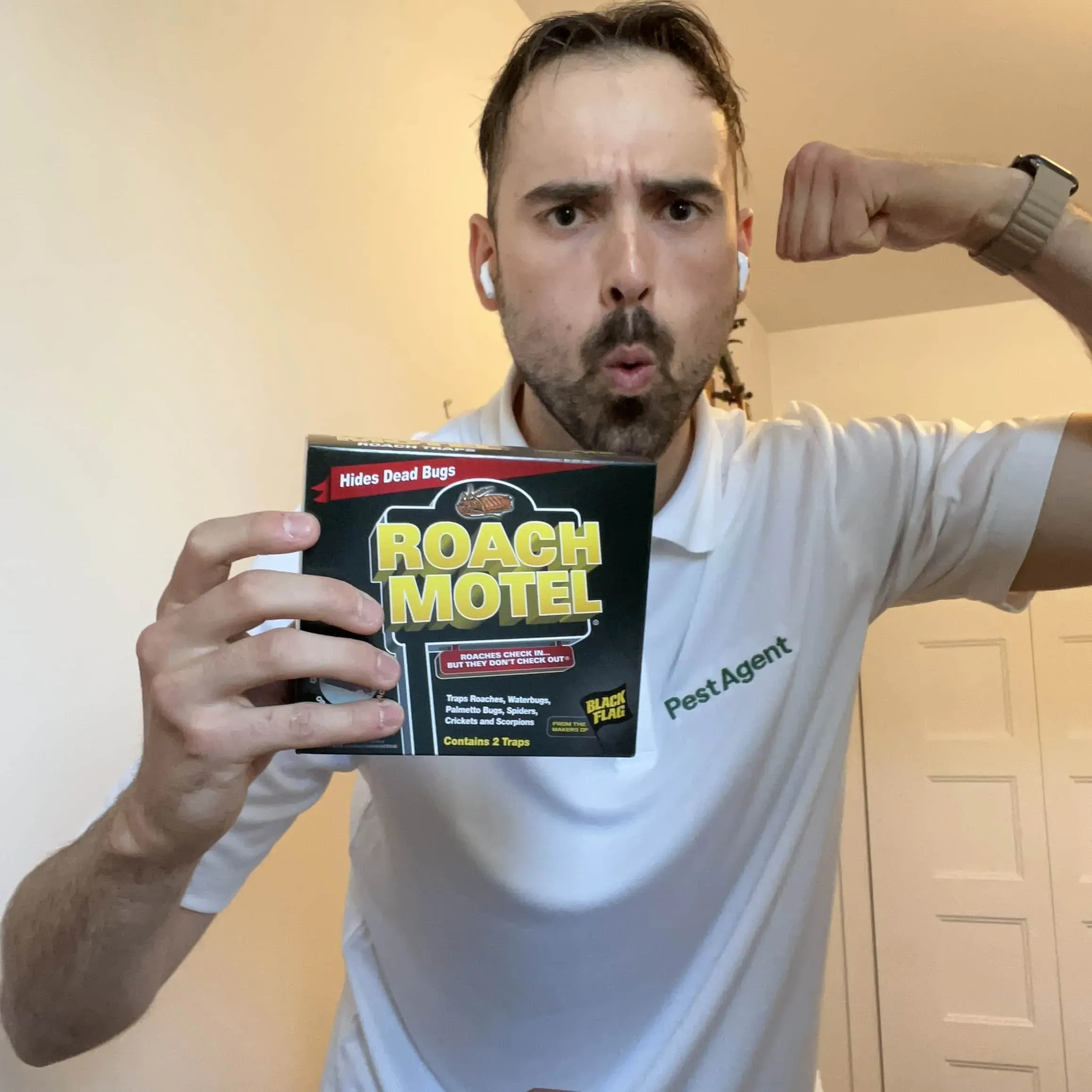 Choosing a bait?See the 5 best cockroach killers we testedOur top pick, the Black Flag Roach Motel (8-pack), costs $27.85 CAD.
When to call a pest control professional
Signs it is time
Roaches in daylight, signs in several rooms, a multi-unit building, or no improvement after a few weeks of cleaning and baiting.
What a pro does
Inspects to identify the species and hiding spots, then baits or dusts and follows up. Uses products not sold to the public (Manitoba).
Learn what cockroach pest control involves, or get a quote from a recommended local exterminator.
Key takeaways
- An infestation is roaches breeding in your home, often unseen for some time.
- Droppings, smears, egg cases and shed skins show up before the roaches do.
- Check the kitchen first, then bathroom, basement and furniture, and confirm with sticky traps.
- The risks are allergens and germs on food, not bites or building damage.
- Cut food and water, use baits not foggers, seal cracks, tell your landlord.
Frequently asked questions
What does a cockroach infestation smell like?
A large one can give off a musty, oily smell from the roaches' secretions, stronger as the population grows.
You usually notice it in closed cupboards, pantries or under sinks.
What do cockroach droppings look like?
From small species such as the German cockroach: ground pepper or coffee grounds, sometimes smeared into dark streaks.
Larger species leave small pellets like mouse droppings, slightly smaller.
Do cockroaches come out during the day?
They are mostly active at night. In daylight, the population is often large or short of food or water.
Treat a daytime sighting as a strong sign of an infestation.
Can a clean house get cockroaches?
Yes. Cockroaches do not necessarily mean a home is unclean (Health Canada).
They arrive in grocery bags, used furniture or boxes, or from a neighbouring unit, then live on little food and water.
Can cockroaches make you sick?
They can contaminate food with salmonella and E. coli, and their droppings and skins hold allergens that trigger allergies and asthma.
Talk to a health-care provider if anyone has symptoms you link to cockroaches.
Dealing with cockroaches right now?
Answer a few short questions and we pass your request to a pest control company ranked near you.