
How to Prevent Cockroaches: A Canadian Home Guide to Keeping Roaches Away for Good
Keep Roaches Out of Your Home Before They Move In
In this article
TL;DR
- Make your home a poor place for roaches by taking away their food, water and shelter. Pesticides alone will not succeed (Health Canada).
- Check used furniture, groceries and boxes before they come inside. Roaches and their egg cases often arrive as hitchhikers.
- Seal and caulk cracks, crevices and pipe openings, and put fine mesh screens over vents and drains (Health Canada).
- Leave nothing to eat overnight: store food in sealed containers, don't let dishes pile up, pick up pet food and take garbage out daily.
- Keep it dry. Fix leaks right away and ventilate damp rooms, because water is a key factor in roach survival (UF/IFAS).
- Need help? Get a quote from a recommended local exterminator through Pest Agent's referral form.
Knowing how to prevent cockroaches matters most before you ever see one, and a spotless kitchen is not enough on its own. Health Canada points out that cockroaches do not necessarily mean a home is dirty: many arrive as hitchhikers in used furniture, grocery bags or a carton brought up from storage.
What keeps them is a home that quietly supplies their needs. A slow drip under the sink, dishes left to soak overnight and a stack of cardboard in the basement do more to invite roaches than a few crumbs on the counter.
Of everything a roach takes from a home, one resource decides how long it lasts, and it is not food.
Why Does Cockroach Prevention Work?
Cockroach prevention works because cockroaches need food, water and shelter, and a home that offers none of the three cannot support them. Health Canada notes that pesticides alone will not be successful, since the living environment must be physically changed first. Prevention is that change: it makes your home a poor place to live, so roaches that get in do not settle and breed.
What Cockroaches Need to Survive
Cockroaches need water most of all. According to UF/IFAS, water is a key factor in cockroach survival: a German cockroach may live only about 12 days with food but no water, compared with about 42 days with water but no food. They also need food (they prefer starches, sugars and proteins but will eat almost anything) and warm, dark shelter. Kitchens, bathrooms, basements and plumbing offer all three, which is why roaches show up there first.
Which Cockroaches You Are Preventing in Canada
The German cockroach is usually the main one you are preventing in Canada. Health Canada describes it as 1.3 to 1.6 cm long, tan to light brown, with two dark parallel streaks behind the head, and notes it has been found in buildings as far north as Nunavut. It lives and breeds indoors, and UC IPM reports that one female and her offspring can produce over 30,000 cockroaches in a year, which is why stopping the first few matters so much. Brown-banded, American and Oriental cockroaches can also turn up in Canadian buildings. Montreal public health reported that in 2018, roughly 3% (about 22,000) of Montreal households had had cockroaches.
How Do You Prevent Cockroaches From Getting Inside?
Preventing cockroaches from getting inside starts with what you bring home, because cockroaches and their egg cases often arrive as hitchhikers. After that, sealing the gaps they use to move in from outside or from a neighbouring unit closes the other door.
Secondhand Furniture and Appliances
Secondhand furniture and appliances are a common way cockroaches get in. Health Canada lists used furniture, food, empty bottles and shipping cartons as ways roaches and their egg cases enter homes, and UC IPM warns that egg cases glued under furniture or inside appliance motors can sometimes start a new infestation. Before you bring a used item inside, check seams, drawers, the underside and any motor area with a flashlight. Alberta Health suggests crushing any egg capsules you find and throwing them out.
Groceries and Deliveries
Groceries and deliveries can carry German cockroaches into the kitchen. UF/IFAS notes that roaches arrive in infested grocery bags, and UC IPM recommends inspecting food deliveries before you put anything away. Unpack bags and boxes on the counter, not in the pantry, and look inside folds and corners.
Cardboard Boxes
Cardboard boxes are both a ride and a home for cockroaches. UF/IFAS reports that cockroaches can breed prolifically in corrugated cardboard, and Montreal public health points out that cardboard and paper are not cockroach-proof. Unpack deliveries quickly, flatten the boxes and put them out for recycling instead of storing them in the basement or under the sink.
Moving Into a New Home
Moving into a new home is a high-risk moment for cockroaches. Montreal public health advises checking electrical appliances, furniture and food for insects during the move and before you settle in. Our guide on how to prevent roaches from moving with you walks through packing and unpacking step by step.
Cracks and Pipe Openings
Cracks and pipe openings are the hiding places and highways cockroaches use inside your walls. UC IPM notes that a German cockroach can hide in a crack about 1/16 inch wide (about 1.6 mm), and young roaches fit into even smaller gaps. Health Canada recommends sealing and caulking all cracks, crevices and pipe openings. Focus on gaps around plumbing under sinks, electrical outlets, baseboards and door and window frames. For larger holes, UF/IFAS suggests tightly packed steel wool can serve as a temporary filler until you can repair them.
Drains and Vents
Drains and vents can let cockroaches in from sewers and wall voids. Health Canada recommends putting a fine mesh screen over vents, open pipes and drains, and UC IPM notes that American and Oriental cockroaches may come up through damaged pipes or faulty drain traps. Keep drain covers in place and have broken plumbing repaired. Our guide on how to stop cockroaches from coming up the drain covers this entry point in depth.
Door Sweeps
Door sweeps close the gap under exterior doors that roaches walk straight through. UC IPM recommends door sweeps on doors and weather stripping on doors and windows. In an apartment, a sweep or rubber seal on your unit door also helps block roaches coming in from the hallway.
How Do You Keep Roaches Away With Food and Cleaning Habits?
Keeping roaches away comes down to leaving them nothing to eat, especially overnight, when they are most active. UC IPM notes that crumbs or liquids in cracks are enough to feed roaches, so small daily habits matter more than an occasional deep clean.
Food Storage
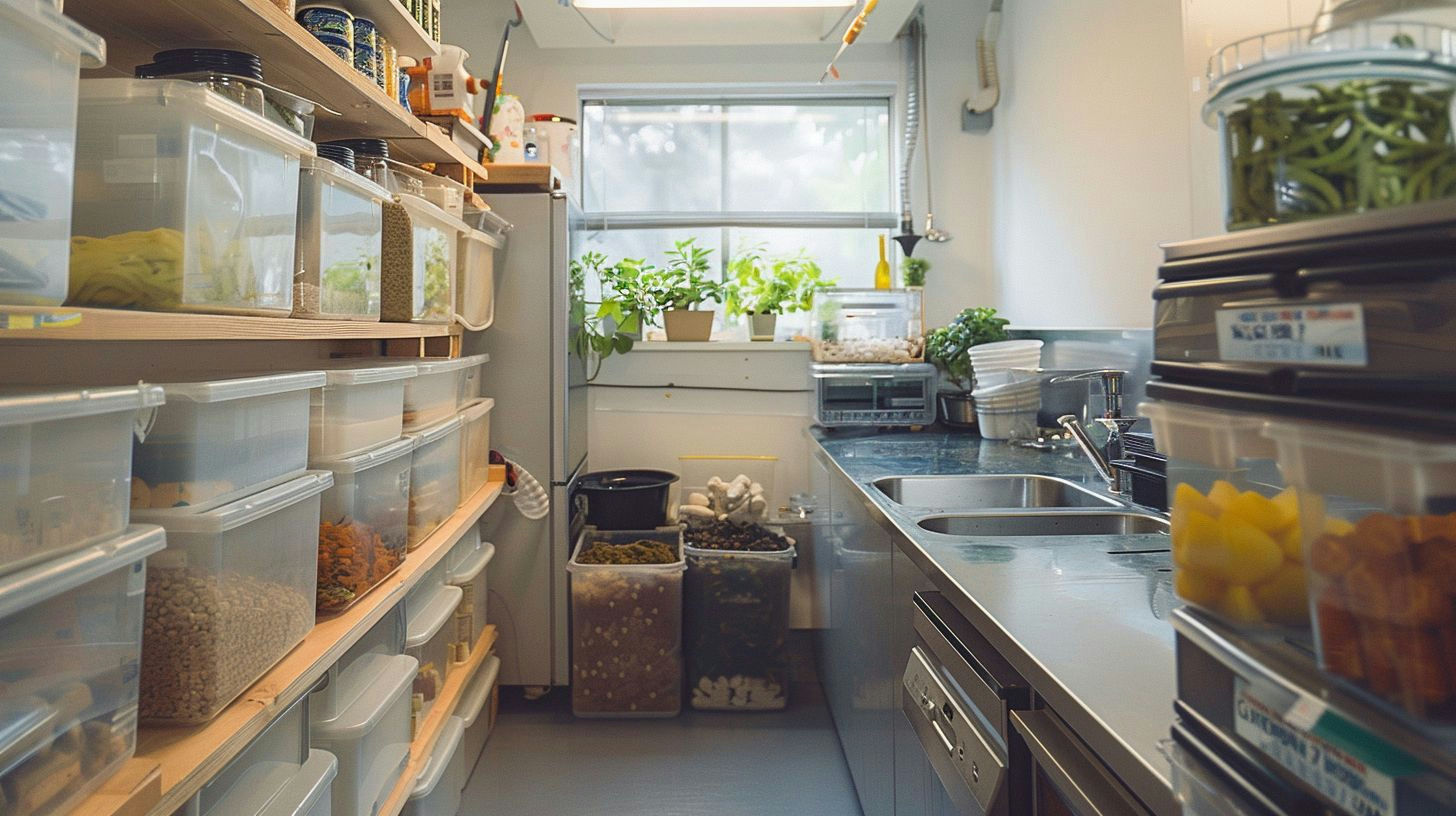
Food storage is your first line of cockroach prevention. Health Canada recommends sealed plastic or glass containers, not paper or cardboard. Move cereal, flour, rice, crackers, sugar and pet kibble out of their original bags and boxes into containers with tight lids.
Crumbs and Grease
Crumbs and grease feed cockroaches long after you have finished cooking. Clean up spills right away, wipe counters and stovetops after meals, and clean behind and under the stove and refrigerator, which Montreal public health singles out as easy-to-forget spots. Our guide to preventing roaches in the kitchen goes room by room through the kitchen.
Dirty Dishes
Dirty dishes left out overnight are an open buffet for roaches. Health Canada advises never letting dishes pile up, especially overnight. If you cannot wash them before bed, soak them in soapy water.
Pet Food
Pet food is one of the most overlooked food sources for cockroaches. Health Canada advises not leaving pet food and water out 24 hours a day, and Alberta Health says not to leave pet food in the dish overnight. Pick up bowls after meals and store pet food in a sealed bin.
Garbage
Garbage needs a tight lid and a short stay indoors. Health Canada recommends sealed plastic containers and daily disposal, and lined bins with tight lids kept away from doorways can also help (UC IPM). Rinse recycling containers before they go in the bin.
Vacuuming
Vacuuming removes the food, droppings and egg cases that keep roaches coming back. UC IPM recommends vacuuming cracks and crevices regularly and using a vacuum with a HEPA filter, because shed skins and droppings can become airborne and trigger allergies. UF/IFAS adds that cockroach droppings contain an aggregation pheromone that attracts other roaches, so scrub any droppings you find with hot, soapy water.
Clutter
Clutter gives cockroaches shelter close to food. UC IPM recommends removing stacks of newspapers, paper bags, rags and cardboard, especially in kitchens and bathrooms. The same rule applies to sleeping areas, as explained in our guide to preventing cockroaches in the bedroom.
How Do You Prevent Cockroaches With Moisture Control?
Preventing cockroaches with moisture control works because water is the most important factor in their survival. A dry home cuts off the one resource roaches cannot go long without.
Leaks
Leaks under sinks, behind toilets and around appliances give roaches a steady water supply. UC IPM advises fixing plumbing leaks to reduce sources of water, so repair any leak right away. Check under kitchen and bathroom sinks every few weeks for drips and damp cabinet floors.
Pipe Condensation
Pipe condensation is a hidden water source inside cabinets and walls. Condensation on pipes under sinks and in wall voids can also matter (UF/IFAS), and Health Canada recommends insulating pipes that collect condensation.
Damp Rooms
Damp rooms such as bathrooms and basements attract cockroaches. Health Canada recommends ventilating or dehumidifying bathrooms and other damp areas. Run the bathroom fan during and after showers, and use a dehumidifier in a damp basement.
Standing Water
Standing water anywhere in the home can keep roaches alive. UF/IFAS suggests not letting water stand in sinks for long periods, emptying sink strainers often, emptying the drip pan under the refrigerator and not overwatering indoor plants. Wipe sinks and tubs dry before bed.
How Do You Prevent Cockroaches in an Apartment?
Preventing cockroaches in an apartment takes your own habits plus a building-wide effort, because roaches travel between units through shared walls and plumbing. UC IPM lists multi-unit housing as a setting where cockroach allergens are a particular concern for children with asthma.
Shared Walls and Pipes
Shared walls and pipes connect your unit to your neighbours'. UF/IFAS notes that infestations spread through plumbing in shared walls and recommends caulking holes in common walls. Seal gaps around pipes under your sinks, behind the toilet and around radiator pipes.
Telling Your Landlord
Telling your landlord early is part of prevention, not a complaint. Montreal public health advises notifying the owner right away if you see cockroaches, because acting quickly can help keep them from spreading through the building. Building owners also have their part to play: Montreal public health encourages them to repair leaks, seal holes and cracks, keep building garbage bins covered, and install rubber seals under doors and fine-mesh screens on conduits.
Tenant Rights
Tenant rights give you a way forward if the owner does not act. In Montreal, public health says the owner is generally responsible for dealing with cockroaches; if nothing happens after you notify them, you can send a registered letter, and if there is still no action within a reasonable time (often up to 10 days), you may be able to call 311 to file a complaint or contact the Tribunal administratif du logement. In Alberta, landlords are generally required by law to keep the home pest-free, and you can call Safe Healthy Environments at 1-833-476-4743 if the problem is not fixed. Rules differ in other provinces, so check with your local public health unit.
Building-Wide Treatment
Building-wide treatment usually works better than treating one unit at a time, because roaches can simply move next door. If your building schedules a treatment, follow the preparation instructions closely.
Which Tools Help Prevent Cockroaches?
The tools that help prevent cockroaches are the ones that detect them early or work quietly in hiding spots, used on top of the habits above, never instead of them. Always read the label and look for a PCP (Pest Control Products) number, which shows the product is registered by Health Canada.
Sticky Traps
Sticky traps are an early warning system, not a cure. UC IPM recommends placing them along the edges where walls meet floors, behind large appliances and inside cabinets, and checking them often. A roach on a trap tells you where to clean, seal and dry out next.
Bait Stations
Bait stations are the safest way to add a chemical layer in an at-risk home. Health Canada notes that tamper-proof bait stations kill cockroaches about 48 to 96 hours after they eat the active ingredient, and UC IPM says baits often take 7 days or longer to show results. Place them where roaches would hide (under sinks, behind the fridge and stove), out of reach of children and pets. Removing other food makes baits work better. For tested products, see our picks for the best cockroach killer.
Boric Acid Dust
Boric acid dust can protect hidden voids where roaches travel, but in Canada it is now registered only for professional use: Health Canada cancelled home-use dusts, with sales ending on July 22, 2018. UC IPM recommends a thin film, not a thick layer, in places such as behind appliance kick panels and under sinks, and notes it only works while it stays dry. Diatomaceous earth, which Health Canada also mentions, likewise stays active only when kept dry. Use a registered product, follow the label, and keep dusts away from children, pets and food surfaces.
Repellents
Repellents such as essential oils and certain plants are popular, but Canadian health authorities base their cockroach advice on sanitation, sealing and moisture control, not on scents. If you want to try them as an extra layer, our guides to cockroach repellents and plants that repel cockroaches explain what to expect.
Foggers
Foggers and bug bombs are a poor choice for cockroach prevention. UC IPM advises avoiding them because they miss the cracks where roaches live and breed and can be hazardous, and sprays in general can scatter roaches into new areas.
Insecticide Chalk
Insecticide chalk should never be used. Health Canada has warned that products sold as "Miraculous Insecticide Chalk", "Insecticide Chalk" or "Cockroach Chalk" contain a highly toxic substance, a particular danger to children because they look like ordinary chalk. Always look for a Pest Control Products (PCP) number on the label, which shows the product has been approved by Health Canada.
When to Call a Pest Control Professional
Calling a pest control professional makes sense when you keep seeing roaches despite good habits, when traps catch roaches every week, or when you live in a building where other units are affected. Alberta Health notes that a certified professional may sometimes need several visits over days or weeks. Our guide on what to do if you have cockroaches explains the next steps, and you can get a quote from a recommended local exterminator through Pest Agent's referral form. For more cockroach guides, visit the cockroach hub.
Need help?
Get a free quoteFrequently asked questions
How do I keep roaches away permanently?
Keep your home dry, sealed and free of food overnight. Store food in sealed containers, fix leaks, caulk cracks and pipe openings, and check secondhand items and boxes before they come inside. No product replaces these habits, because Health Canada notes that pesticides alone will not succeed without changing the living environment.
Can you get cockroaches in a clean house?
Yes. Health Canada says the presence of cockroaches does not necessarily mean conditions are unclean, and Montreal public health stresses that anyone can have them. Roaches often arrive in boxes, groceries or used furniture, or come through walls from a neighbouring unit. A clean home simply makes it much harder for them to settle in.
Will cockroaches leave if there is no food?
Taking away food helps, but water matters even more. According to UF/IFAS, a German cockroach may survive about 12 days without water but up to about 42 days without food. Removing both food and water, and sealing their hiding spots, is what makes a home unlivable for them.
What smell keeps cockroaches away?
Scents such as peppermint, citrus or bay leaves are widely recommended online, but Canadian health authorities do not appear to list them as a prevention method. Health Canada's advice focuses on cleaning, food storage, sealing and moisture control. Use scents only as an extra, never as your main defence.
Do cockroaches only live in big cities?
No. Health Canada reports that German cockroaches have been found in buildings as far north as Nunavut. They live indoors and travel in belongings, so they can turn up in any heated building, in any part of Canada.
Dealing with cockroaches right now?
Answer a few short questions and we pass your request to a pest control company ranked near you.
Get a free quote