
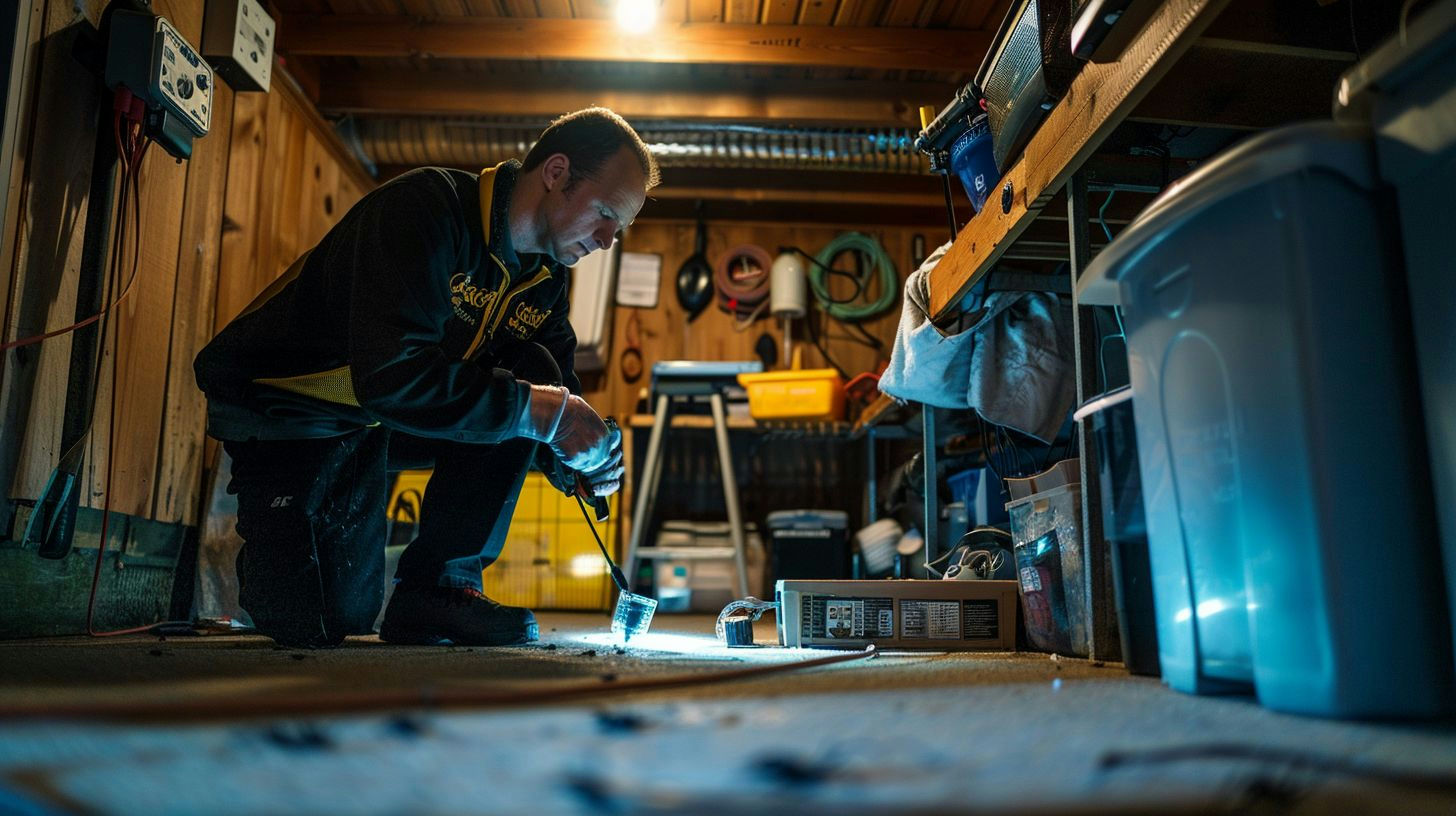
Ants crowding around a fresh bait station look like proof the product failed, yet a busier trail in the first few days usually means the workers are feeding and hauling the bait home. That gap between what a homeowner sees and what the colony is doing makes the right moment for ant pest control hard to judge.
Some ant problems do justify an ant exterminator: carpenter ants tunnelling into damp wood, pharaoh ants moving through an apartment building along pipes and wires, or stinging European fire ants in the yard. A professional visit differs from another can of spray mainly in its target, since the ants on the counter are rarely the ones that need to die.
What Is Ant Pest Control?
Ant pest control is a professional service in which a licensed technician identifies the ant species, finds the colony and eliminates it at the source. Most Canadian companies describe the same three stages: an inspection, a treatment built around the species, and follow-up monitoring (Orkin Canada, Terminix Canada, commercial). The goal is the colony and its queens, not only the ants walking across your counter.
How Ant Pest Control Differs From DIY
Ant pest control differs from DIY mainly in its reach. According to the University of Kentucky, the ants you see foraging are usually only a small part of the colony, and many more, including one or more egg-laying queens, stay hidden in the nest. UC IPM notes that pesticide sprays only provide temporary control and may not be safe to use indoors.
That does not mean every ant problem needs a professional. Many kitchen invasions by small ants clear up with the right bait, patience and good food storage. Start with our guide on how to get rid of ants, and call a professional if the steps there do not work.
Why the Ant Species Matters
The ant species matters because each one reacts differently to treatment. Canada has many species of ants, according to the City of Calgary, and most of them nest outdoors and come inside only to look for food. Health Canada lists the carpenter ant, little black ant, odorous house ant, thief ant and pharaoh ant among the species that invade Canadian homes, and pavement ants can also come indoors. A spray that works on one species can make another split into new colonies, which is why a good ant exterminator identifies the ant before choosing a product. Our ant hub has guides for each common species.
When Do You Need an Ant Exterminator?
You need an ant exterminator when ants damage wood, sting, spread when sprayed, or keep coming back after weeks of proper baiting. These are the situations where professional ant control is worth the cost.
Carpenter Ants
Carpenter ants are the most common reason Canadians call an ant exterminator. Health Canada describes them as 6 to 25 mm (.24 to 1 inch) long and well known for their ability to damage wooden structures. Signs include piles of sawdust-like shavings, slit-like openings in woodwork, a dry rustling sound in the walls at night, and winged ants trying to get outside, usually in spring. Winged ants indoors are covered in our guide to flying ant exterminators. Indoors, they prefer moist, decaying wood, so they can also point to a moisture problem.
Health Canada advises using a professional exterminator in difficult situations, because a well-established colony usually means finding and treating the actual nest. Our guide to carpenter ant pest control covers that service in detail.
Pharaoh Ants
Pharaoh ants are tiny ants, usually about 1.5 to 2 mm long and yellow or light brown to red, that live inside heated buildings in Canada. Insecticidal sprays can make their colonies bud, which means part of the colony moves to a new nest and the problem spreads (Alberta Health); UC IPM also says sprays only make infestations worse. Alberta Health also notes that serious infestations may need a certified professional and several visits over days or weeks. Learn how to recognise them in our guide to pharaoh ants.
Odorous House Ants
Odorous house ants are brown to black ants that give off a rotten, coconut-like smell when crushed. They often have multiple queens, and their colonies can split when disturbed by repellent products, so the University of Kentucky describes them as very difficult for homeowners to control. Utah State University adds that indoors they look for moisture and heat. A professional usually combines baiting with fixing the moisture source that draws them in (Pesticon, commercial).
European Fire Ants
European fire ants are small red-brown ants, 2 to 3 mm long, that sting when their nest is disturbed. According to the Invasive Species Council of BC, they arrived in British Columbia around 2010 and often settle in lawns, parks and golf courses. Stings are irritating and, in rare cases, have caused allergic reactions. The Council's advice is clear: do not try to remove a nest yourself, and do not move soil, turf or leaf litter off your property. Our guide to fire ants explains what to watch for.
Ants That Keep Coming Back
Ants that keep coming back after proper baiting are a good reason to call a professional. Health Canada says two different baits at the same time give better results, and recommends keeping baits out for at least two weeks, with no spraying in the meantime. If you have done that and the trails are still there, the colony may be in a wall, under a slab or in several places at once, and a technician can find it.
Ants in Several Rooms
Ants in several rooms usually mean several nests, not one. This is common with pharaoh ants in apartment buildings, where workers can travel along electrical wires and plumbing pipes (UC IPM), so treating a single unit may not reach every nest. If you rent, tell your landlord or property manager, and see our guide to ants in an apartment.
What Ant Control Methods Do Professionals Use?
Ant control by professionals relies on slow-acting baits, dusts and targeted spot treatments chosen for the species, not on spraying every ant in sight. Most companies combine several methods in one plan.
Inspection
Inspection is the first step of any ant control plan. The technician identifies the species, maps trails, entry points and nesting areas, and looks for what attracts the ants, such as food or moisture (Pesticon, Abell Pest Control, commercial). For large black ants, the inspection also tells carpenter ants apart from termites.
Baits
Baits are the backbone of professional ant control. They mix a slow-acting insecticide with food the ants like, so workers carry it back to the nest and share it with the queens. Professionals use gel baits, enclosed bait stations, granular baits and liquid baits, placed along trails and in high-activity areas. The City of Calgary notes that slow-acting baits, such as boric acid baits, eliminate the colony and are generally of low toxicity to other animals.
Dusts
Dusts are fine powders that a technician puffs into cracks, wall voids, crawl spaces and other hard-to-reach spots. Ants walking through pick up the dust on their legs and antennae and spread it through the colony (Orkin Canada, commercial). Health Canada notes that diatomaceous earth, one dust option, can be placed in cracks and crevices as a non-chemical means of control.
Residual Sprays
Residual sprays leave a thin layer of insecticide that keeps working for a while after it dries. Professionals use them as spot treatments in cracks, along baseboards and behind appliances, and sometimes around the outside of the foundation. Use them with care: Health Canada and the City of Calgary both warn that some sprays can make a colony split, and UC IPM says sprays only make pharaoh ant infestations worse, so use slow-acting bait for them, never repellent sprays.
UC IPM gives a useful tip: if you hire a pest control company, ask them to use baits and spot treatments rather than perimeter treatments or monthly sprays. UC IPM also advises avoiding pyrethroid sprays on driveways, sidewalks and foundations, because these products pollute waterways.
Nest Treatment
Nest treatment means applying a product directly into the nest once it has been found. It is the standard approach for carpenter ants, since Health Canada notes that a well-established colony usually requires locating and treating the actual nest site. For a closer look at the products involved, read what professionals use to kill ants.
Sealing Entry Points
Sealing entry points keeps new ants from walking in after the colony is gone. Health Canada recommends repairing and sealing visible cracks in the foundation and exterior walls and caulking along baseboards, cracks and crevices indoors. Many companies point out the gaps they found and recommend sealing measures as part of the service.
What Happens During Ant Removal?
Ant removal usually follows the same sequence: preparation, treatment day, a short time away from treated areas, then follow-up. Here is what to expect.
Before the Visit
Before the visit, the company should tell you how to prepare. Quebec's government advises throwing out infested food, moving furniture so the technician can reach the work areas and vacuuming thoroughly. One Halifax company also asks customers to move items away from interior walls and closets, clear the space under sinks and remove pets from the treatment area (NS Pest Control, commercial). Our checklist on how to prepare for an ant exterminator walks you through it.
Treatment Day
Treatment day is usually short for ants. NS Pest Control reports that a visit typically takes 30 to 90 minutes (commercial), depending on the size of the home and the number of areas treated. Quebec's guidance says that no one but the workers applying pesticides should be in the area during the application.
Safety for Kids and Pets
Safety for kids and pets depends on the products used and on following the label. In Canada, every pest control product should carry a Pest Control Products (PCP) number, so you know Health Canada has approved it, and Health Canada notes that the label is a legal document the applicator must follow. Quebec advises keeping children and pets away during spraying and covering aquariums, the Government of British Columbia says to keep insecticide away from children and pets, and Missouri Extension advises keeping them off treated areas until they dry.
Ask the technician how long to stay out of treated rooms. One Halifax company gives a 4 hour re-entry period after spraying indoors (commercial), but the right wait depends on the product. Baits in closed stations, placed out of reach, are usually the lowest-exposure option: UC IPM calls bait stations the safest and easiest to use.
How Long Results Take
Results take days to weeks, because slow-acting products need time to reach the queens. UC IPM says it can take 5 to 10 days to see fewer ants with baits. According to the University of Kentucky, you may even see more ants around the bait at first, which can show they are feeding on it. Quebec's government notes that in some cases more than one treatment may be necessary.
Follow-Up Visits
Follow-up visits check that the colony is gone and allow the technician to re-treat if needed. Many companies include them in a warranty, and most also give prevention advice. Store food in sealed containers, fix leaks, and remove easy access to food and water, which Health Canada calls the easiest way to avoid ant problems.
How Do You Choose an Ant Exterminator in Canada?
Choosing an ant exterminator in Canada starts with a licence check, then a written plan, a clear warranty and comparable quotes. Health Canada notes that licensed applicators are trained in proper pesticide use, so the licence is the first filter.
Provincial Licence
Provincial licences are required to apply pesticides commercially, and the rules differ by province:
- Ontario: unless exempt, applicators need a pesticide exterminator licence (structural extermination is one licence type), and extermination businesses need an operator licence. You can search licences in the province's Access Environment tool.
- Quebec: choose a company that holds a C5 or D5 extermination permit and whose employees hold a CD5 certificate, and check the Registre public de la Loi sur les pesticides.
- British Columbia: the province certifies structural pesticide applicators.
- Other provinces: ask to see the company's operator licence and the technician's applicator licence before any product is applied, as Newfoundland and Labrador advises.
Written Contract
A written contract protects you if something goes wrong. Quebec's government says the contract should state the nature of the work, the exact names of the products with their registration numbers, and the areas that will be treated. It also says a company should inspect first, agree on the method with you, apply pesticides only where necessary and suggest ways to prevent the problem from returning.
Warranty
Warranty terms vary widely, so get them in writing. Examples reported by pest control companies (commercial) include free re-treatment within 100 days (Pesticon), a three month guarantee on the inside of the home (NS Pest Control) and coverage for 30 days on a one-time plan (Terminix, US). Many guarantees depend on you following the sanitation and sealing advice and allowing scheduled follow-ups (Orkin Canada).
Price Quotes
Price quotes for ant control depend on the species, the size of the home and how far the infestation has spread, and prices vary. As examples, Pesticon reports that most residential treatments in Ontario range between $150 and $300, and one Halifax company starts at $150 with a $50 inspection fee credited to the treatment (commercial). See our guide to the cost of ant extermination in Canada for more detail. You can also get a quote from a recommended local exterminator through Pest Agent's referral form.
Questions to Ask
Questions to ask before you book help you compare companies on more than price:
- Which ant species do you think this is, and how will that change the treatment?
- Will you use baits and spot treatments, or perimeter and monthly sprays?
- Which products will you use, and what are their PCP numbers?
- How should I prepare, and how long should kids and pets stay out of treated areas?
- How many visits are included, and what does the warranty cover?
- Can I see your provincial licence?
Frequently asked questions
Is it worth paying for ant pest control?
It is worth it for carpenter ants, pharaoh ants, stinging ants and infestations that keep returning after two weeks or more of proper baiting. For a few small ants in the kitchen, a good bait and better food storage are often enough.
Why do I see more ants after the exterminator came?
Seeing more ants for a few days is common when baits are used, because workers gather to feed on the bait and carry it back to the nest. Activity should drop after that. Health Canada says not to spray while using baits or they will not work, and avoid cleaning around them.
Do exterminators get rid of ants permanently?
A good treatment can often eliminate the colony, but new ants can arrive from outside later. Sealing cracks, fixing leaks and storing food properly lower the risk, and a warranty covers re-treatment if ants come back within the set period.
Do I need to leave the house during ant treatment?
Usually you only need to stay out of the treated areas until the products dry or for the time the technician gives you. Ask before the visit, and, as the Government of British Columbia advises, keep children and pets away from treated spots until it is safe.
Can I get rid of ants without an exterminator?
Yes, many ant problems clear up with slow-acting baits, patience and good habits. Use two different baits, keep them out for at least two weeks, and do not spray while baiting. Call a professional if ants damage wood, sting or keep returning.
Dealing with ants right now?
Answer a few short questions and we pass your request to a pest control company ranked near you.
Get a free quote